Sonstrust Statement on Colt Teams Proposals

THE SONSTRUST would like to reaffirm its opposition to the idea of ‘colt teams’ being introduced into the SPFL League system. In a consultation conducted in 2018, 89% of Trust members voted against the idea of having Colt teams play in our lower leagues, and it is also the unanimous position of the Sonstrust Board. We would therefore firmly oppose any league reconstruction proposals which introduced colt teams into the bottom tier.
We believe the democratic principle of ‘one club, one team’ should be upheld, and to see the lower tier devalued into little more than a development league for the top two sides in Scotland to test their youth against is something we could not support under any circumstances. This opportunistic attempt to use the crisis in Scottish football to shoehorn their development sides into the lower leagues, with the promises of guaranteed ticket sales and joining fees should be recognised as no more than a bribe – one that compromises the integrity of the competition. We believe that whatever financial benefit can be obtained by admitting colt teams into the league will be outweighed by the loss of revenue and goodwill from our supporters who overwhelmingly oppose the idea. The low attendances and boycotts at Challenge Cup fixtures involving colt teams both at The Rock and at many other grounds across Scotland show that there is little appetite to see the introduction of colt teams into the league.
The Sonstrust will therefore be making firm representations to the Club in opposition to any reconstruction proposal involving colt teams being introduced into the league setup. No matter the financial gain, the Club should not sells its soul by voting for such a proposal and risk antagonising its supporters who have been incredibly generous to the club over the past few months, rallying around and contributing financially to help ensure the future of our club.
A Letter to Members From Stephanie Park
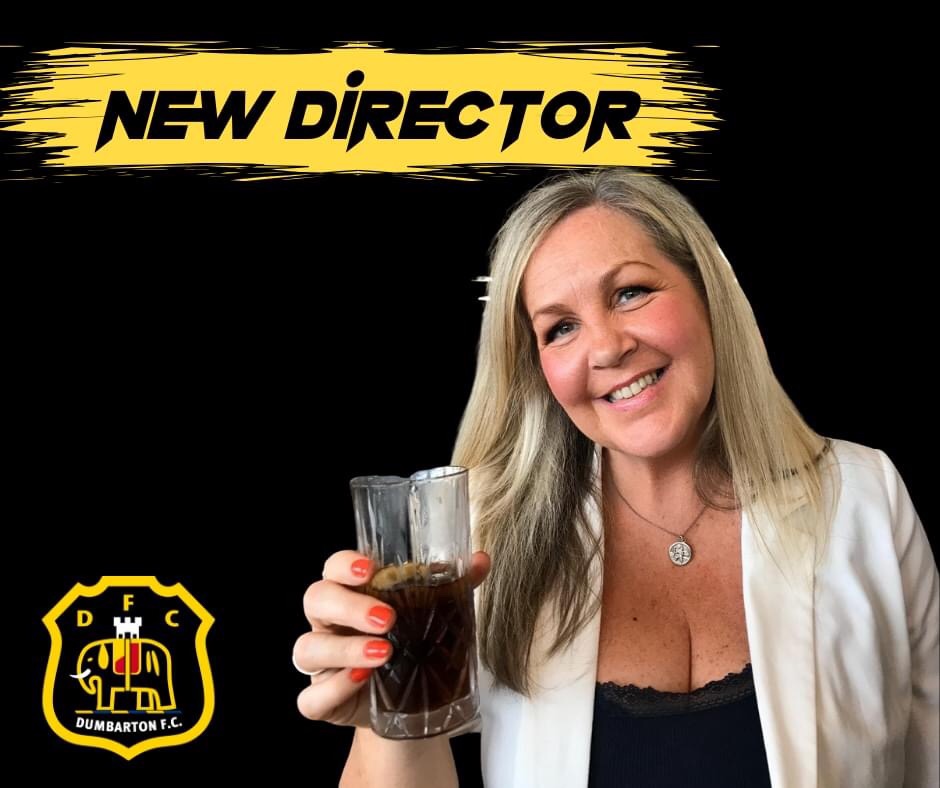
Dear Trust Member,
I hope you are all well and looking after each other.
I am absolutely delighted at being elected on the to board as your Sonstrust Representative, especially as the other two candidates were stiff competition.
I hope I will do you proud and aim to carry out the role to the very best of my abilities. It is going to be a challenge as we are in very strange and worrying times but WE WILL get through it.
Please do not hesitate to contact me if you have any questions or queries or indeed ideas to help our club through these difficult times. It is important now more than ever that we all work together as a team to help our club survive this crisis.
You can contact me at hospitality@dumbartonfc.co.uk
As I said during the voting stage I want to be approachable to all, obviously I can’t see you in person at the moment but please, feel free to contact me by email at any time. I will respond to everyone. Meetings will be held once it is safe to do so.
Once we know what is happening next season I will see and speak with everyone, I know how much I am missing my Saturdays at the club so I am sure you will be the same.
Stay safe and hopefully see you all soon.
Kind regards,
Stephanie
SONSTRUST 2019-20 AWARDS
 The Sonstrust Player of the Year Awards will this year be held online, with a virtual award ceremony! With the season coming to a close early due to the ongoing Coronavirus pandemic, we’ll be asking Sons fans to cast their vote online for their Player of the Year and Young Player of the Year. If you travel with us on the Trust organised bus to away games then you’ll also be able to vote for the Sonstrust Travel Club Player of the Year.
We then hope to bring you a pre-recorded POTY show on Facebook on Saturday evening, which will feature acceptance speeches from the recipients of the awards. Other awards up for grabs include the Sons View Player of the Year (chosen by the matchday programme team), Highest Goalscorer award and Goal of the Season.
You can vote from now until Friday 1st May at 10PM for your POTY picks at this link: https://forms.gle/ZJDLQCLydRccwRfE8
TRUST DIRECTOR ELECTION
VOTING is now open on our online voting platform for the election of the Sonstrust Representative on the Club Board! Members for whom we have email addresses on file should have received an email last night with information about the election and with a link to the online voting platform. Members we do not have this information for have been sent a postal ballot.
You can cast your vote in 2 minutes here: https://forms.gle/f5bxnDYxbDgm9Z8k6
A small number of people have not received the email as the email address we have on file for them is inactive. If this applies to you don’t worry, you’re still able to vote at the link above!
We have also released a video interview with all 3 candidates where they set out why you should vote for them. You can view that on our newly created Sonstrust YouTube channel here: https://youtu.be/1YGBsAXRijE
Voting is open until the 16th March at 17:00. Please use your vote!
Election information
STEPHANIE PARK – STATEMENT

ROBBI DOCHERTY – STATEMENT

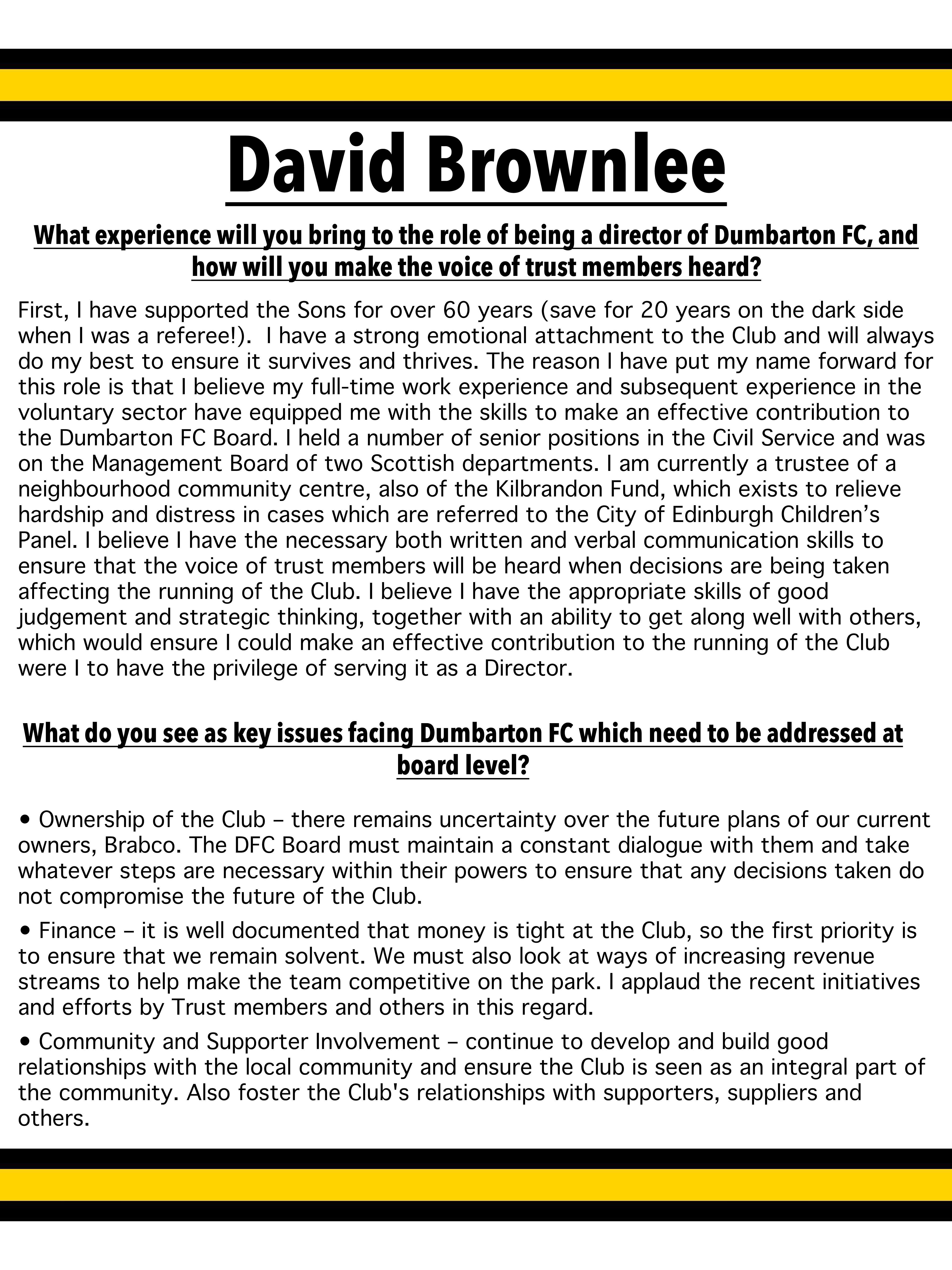
DAVID BROWNLEE – STATEMENT
ELECTION OF A REPRESENTATIVE TO THE DFC BOARD
SONSTRUST members will have their chance to have their say on who should be the new Trust representative on the Club Board. As a result of Alan Findlay standing down from the Club Board after many years of incredible work for both the Trust and the Club, the Sonstrust will be running an election to nominate his successor. Three candidates have put themselves forward; David Brownlee, Robbi Docherty and Stephanie Park. The Trust board that formed after the AGM in October has been working hard to organise the election and details are as follows:
A hustings will take place post-match on Sat 22nd February (vs Forfar Athletic) in Bar 72, where members can hear from the candidates, and ask any questions they may have.
Voting will then take place
- For members who have provided the Trust with an email address, they will be able to vote via an online election platform which members will be sent a link to. This will also be shared on the Trust website and social media platforms
- For members who haven’t provided an email address, they will be sent a paper ballot by post, which they can fill out and send by post to:
Sons Supporters Trust, The C&G Systems Stadium, Castle Road, Dumbarton, G82 1JJ
- Alternatively, any member wishing to do so will have the opportunity to cast a paper ballot after the hustings on the 22nd February, and also pre-match at the Trust table on the 29th February.
- The poll will close at 17:00 on Monday 9th March. Members should ensure their ballots are cast by then, and that members voting by post send their ballots in time. The results of the ballot will be shared shortly afterwards.
In the meantime, the three candidates were asked to provide a short statement including answers to the following questions. Their answers will follow after this post.
“What experience will you bring to the role of being a director of Dumbarton FC, and how will you make the voice of trust members heard?”
“What do you see as key issues facing Dumbarton FC which need to be addressed at board level?”
New Sonstrust Board
 THANKS to the 40+ people who turned out on a cold and wet Wednesday night last week to attend the Sonstrust AGM.
One of the key pieces of business was electing a new trust board. Congratulations, therefore to: Jack Brough, David Brownlee, Jordan Brownlee, Denise Currie, Robbi Docherty, John J Duffy, David Ferguson, Joanne McBride and Alistair Thorn. They will meet for the first time on Saturday 23rd November, and will elect officers.
Thanks are due to the retiring board members: Brian Payne (chairman), Alan Findlay (secretary), Andy Galloway, David Powell, Simon Barrow, David Richardson and Jack Crawford.
The meeting also received written statements and short presentations from the three candidates who have put themselves forward to be Alan Findlay’s replacement as trust representative on the Club board, as a director of DFC. They are David Brownlee, Robbi Docherty and Stephanie Park. It was agreed that those names would be put forward through the trust board in consultation with the club board. The appointment needs to be agreed by both the trust and the chairman and directors of the Club, with whatever consultation or process the trust board feels is appropriate.
Audited accounts for 2017 and 2018 were also accepted, with French Duncan being re-appointed for that role in 2019/20. There was also discussion of the precise legal form the trust will take moving forward. Following a change in legislation in 2014 and the end of the mandate from the 2016 AGM we have been operating as an unincorporated association. At present we are notified to the FCA as a community benefit company. The trust board will take this forward, and call a further AGM, probably in February 2020 to bring us up-to-date.
The meeting also discussed the future of Dumbarton FC, and heard a pithy presentation on community ownership and the future of the game from Paul Goodwin, CEO of the Scottish Football Supporters Association. A minute will be made available shortly.
 Sons Supporters Trust